
There was a time when “content marketing” meant one writer, one blank Google Doc, and a coffee-fueled race against a deadline. That era is over.
Today, automated content creation helps produce many of the blogs, social media posts, and product descriptions people see every day—often without readers realizing it. Instead of simply expanding their content teams, many businesses are using smarter systems that can draft, format, optimize, and publish content while reducing the amount of manual work involved.
This isn’t about replacing writers. It’s about removing the repetitive 80% of content work so humans can focus on the 20% that actually needs a human brain — strategy, nuance, and fact-checking.
Whether you’re a solo blogger juggling five WordPress sites, an agency owner stretching a lean team across ten client accounts, or an in-house SEO manager tired of copy-pasting the same update across twelve landing pages — this shift affects you directly.
Quick Tidbit: Companies using AI-assisted content workflows report publishing up to 3-5x more content without proportionally increasing headcount — a big reason “content automation” search volume has climbed steadily over the past two years.
Let’s break down exactly what this shift looks like, starting with the basics.
What is Automated Content Creation?
Quick Answer Box:
Automated content creation is the use of AI tools, scripts, and software platforms to generate, format, and publish written or visual content — such as blog posts, social media captions, and product copy — with minimal manual input at each step. Instead of a human writing every asset from scratch, automation handles repetitive tasks like drafting, structuring, and scheduling, while humans focus on editing, strategy, and quality control.
In simpler terms: it’s the difference between typing out 20 social captions by hand every week, versus feeding one core idea into a system that generates, formats, and schedules those 20 captions for you.
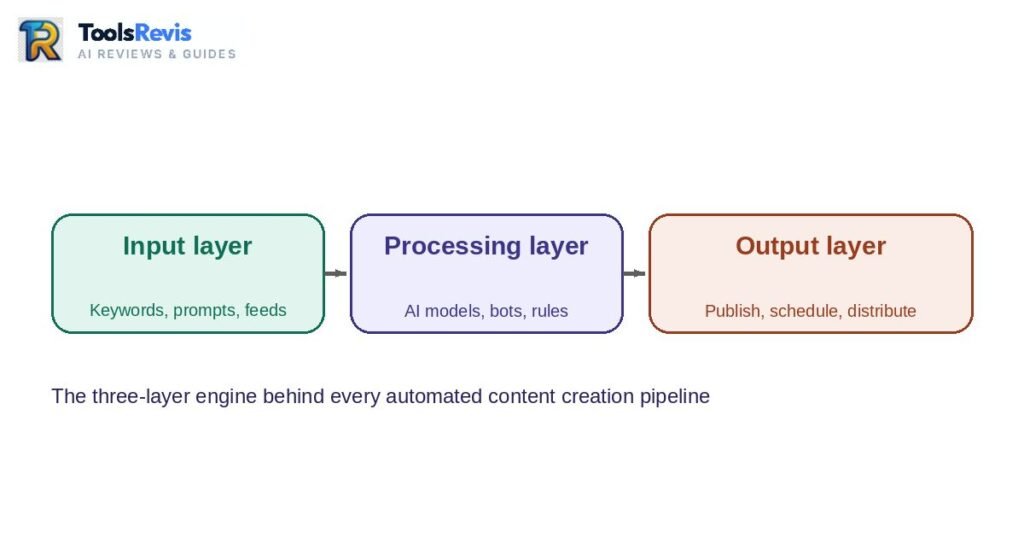
What is content automation, at its core, boils down to three layers working together:
- Input Layer – A prompt, template, keyword, or data feed (e.g., a product list, a trending topic, an RSS feed).
- Processing Layer – AI models (like GPT-based systems) or rule-based bots that transform that input into structured content.
- Output Layer – The final stage where publishing tools—such as WordPress plugins, n8n workflows, and social media schedulers—automatically publish the completed content across platforms, often without requiring manual intervention for each individual asset.
Benefits of AI-Driven Content Creation
The benefits of AI-driven content creation go beyond “it’s faster.” Here’s what actually moves the needle for real teams:
- Speed at scale — a single blogger can now maintain output that once required a 3-person editorial team.
- Cost control — Automation handles repetitive tasks, allowing agencies to keep costs lower while maintaining healthy profit margins.
- Consistency — automated pipelines don’t have “off days,” which matters for SEO algorithms that reward publishing regularity.
- Multi-platform reach — one core idea can be reshaped into a blog post, five social captions, and a newsletter blurb almost simultaneously.
- Data-driven decisions: Many AI tools automatically include keyword and trend insights, helping you make smarter decisions instead of relying on guesswork.
Pro Tip: The smartest teams don’t automate content creation end-to-end. They automate the repetitive 80% (drafting, formatting, scheduling) and keep a human in the loop for the final 20% (tone, accuracy, brand voice). We’ll dig deeper into this “80/20 Rule” later in the FAQ section.
AI Content Software vs. Manual Processes — The Reality of Speed and Cost
AI-integrated content processes use automation to draft, format, and schedule content in a fraction of the time manual workflows require — cutting production time from days to hours. For years, people believed there were only two options: hire more writers or produce content more slowly. That framing is outdated. The real comparison today isn’t between humans and AI.It’s between teams that use AI as a smart tool to improve their work and teams that still do everything manually. The difference in speed, efficiency, and scalability is much bigger than most people realize.
Let’s compare the two approaches based on what matters most: speed, time spent on repetitive tasks, costs, and how easily they can scale as your workload grows.
| Factor | Manual-Only Process | AI-Integrated Process |
| Speed | Days per long-form asset | Hours (draft) + minutes (edit) |
| Admin overhead | High — formatting, scheduling, repurposing done by hand | Low — templates and bots handle repetitive steps |
| Cost per asset | High (hourly writer/editor rates) | Significantly lower at scale |
| Scaling capacity | Limited by headcount | Limited mostly by editorial review capacity |
| Consistency | Varies by writer mood, workload, fatigue | Stable output, same structure every time |
Quick Tidbit: Teams that switch from fully manual content creation to AI-assisted workflows often reduce first-draft creation time by 60–70%. The reason isn’t that AI writes better—it’s that it eliminates the challenge of starting from a blank page, giving teams a solid first draft to build on.
AI Content Creation Software — Automated vs Manual Processes
This is where most people misunderstand the process. They assume “automated” means “fully hands-off.” It doesn’t — and treating it that way is exactly how brands end up with generic, robotic content that Google’s quality systems quietly bury.
The smarter model is human-in-the-loop automation:
- AI handles: first drafts, outline generation, keyword-based structuring, basic formatting, bulk variations for multiple platforms.
- Humans handle: fact-checking, tone calibration, brand voice, final proofreading, and strategic edits before publishing.
This hybrid approach is precisely how smart content creation avoids the two biggest automation traps:
- Creative burnout on the human side — because writers aren’t grinding out the same repetitive drafts manually anymore.
- Generic, soulless output on the AI side — because a human still shapes the final voice before it goes live.
Pro Tip: If your team dreads writing the same type of content (product descriptions, weekly social captions, meta descriptions) — that’s your first automation candidate. Save human creative energy for the content that actually needs it: pillar pages, thought-leadership, and brand storytelling.
Cost-Effectiveness of AI Tools for Content Creation
Here’s the number that matters most to lean agencies and solo bloggers: cost per published asset drops sharply once automation is introduced — not because quality drops, but because the time-to-publish shrinks.
A rough real-world comparison:
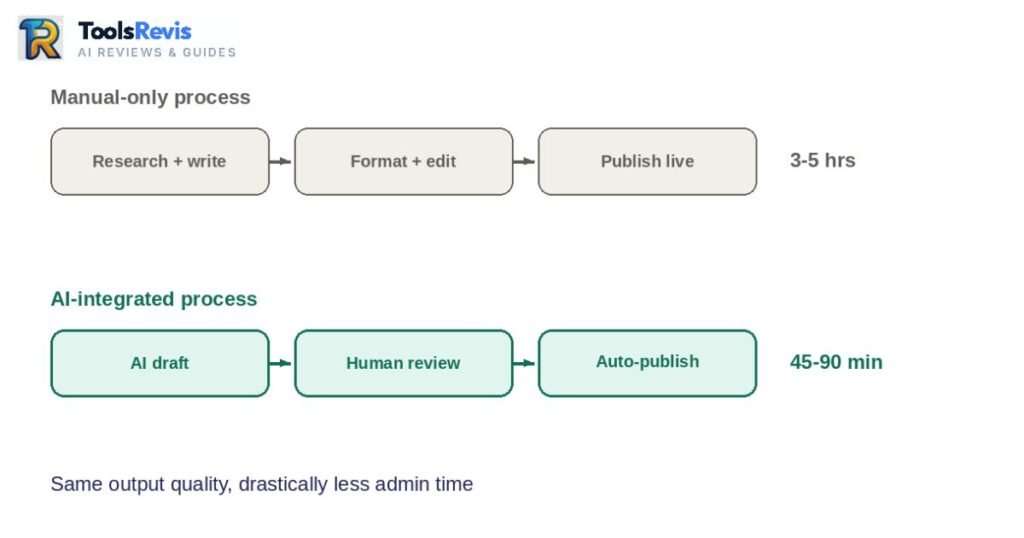
- Manual blog post: 3-5 hours (research + writing + formatting + upload)
- AI-assisted blog post: 45-90 minutes (AI draft + human edit + formatting automation + auto-publish)
That difference compounds fast. Over a month of 20 blog posts, that’s the difference between needing a 3-person content team versus one editor overseeing an automated pipeline.
This is exactly why cost-effectiveness of AI tools for content creation has become a top search query among agency owners — it’s not a vanity metric, it’s a margin-protection strategy.
The Tech Stack — Content Automation Platforms & Bots for Bulk Production
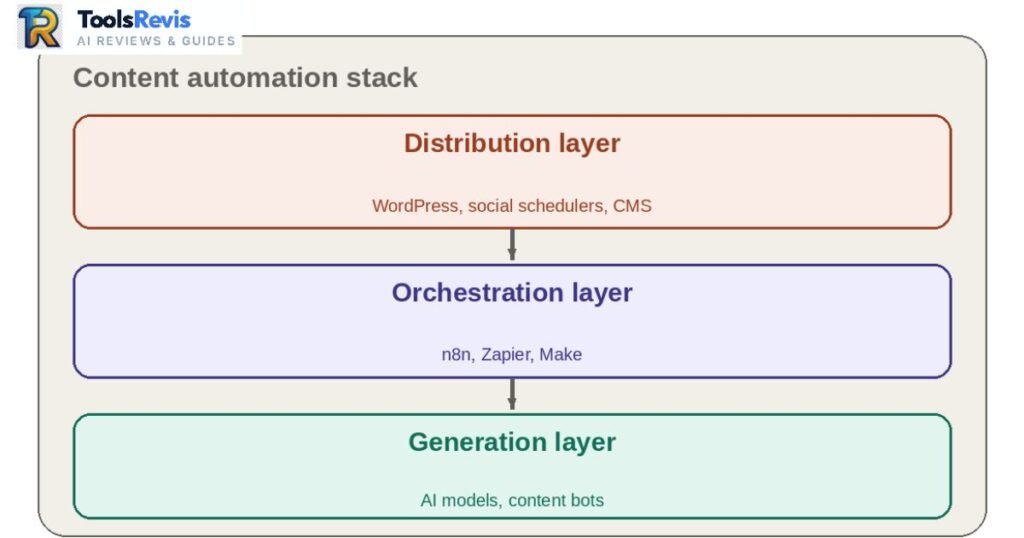
A content automation stack is a combination of software tools, APIs, and bots — generation, orchestration, and distribution layers — that move content from idea to published post without manual babysitting. Once a team decides to move from manual to automated, the next question is always: what actually powers this? The answer isn’t one single tool — it’s a stack: a combination of software, APIs, and connector bots working together to move content from idea to published asset without constant manual babysitting.
Think of it like a factory assembly line, except the “materials” are keywords, prompts, and data feeds, and the “product” is a finished blog post, social caption, or product description.
The Core Layers of a Content Automation Stack
- Generation Layer — AI models that produce the actual draft (text, images, or video scripts).
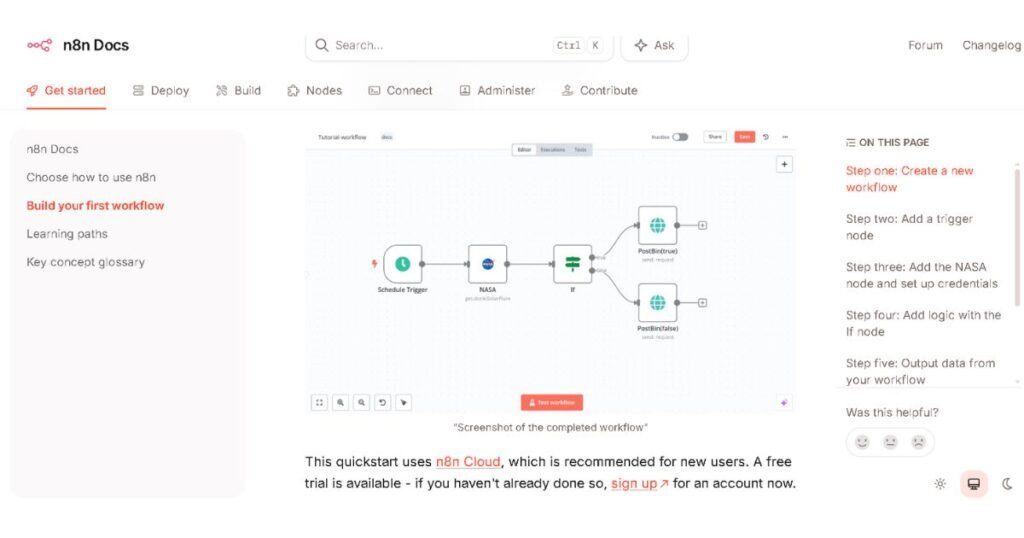
- Orchestration Layer — Workflow tools (like n8n, Zapier, Make) that connect different apps and trigger actions automatically.
- Distribution Layer — Publishing endpoints (WordPress, social schedulers, CMS platforms) where the finished content actually goes live.
Quick Tidbit: The rise of content marketing automation searches over the past year tracks almost perfectly with the growth of no-code orchestration tools — teams no longer need a developer on staff to build a working automation pipeline.
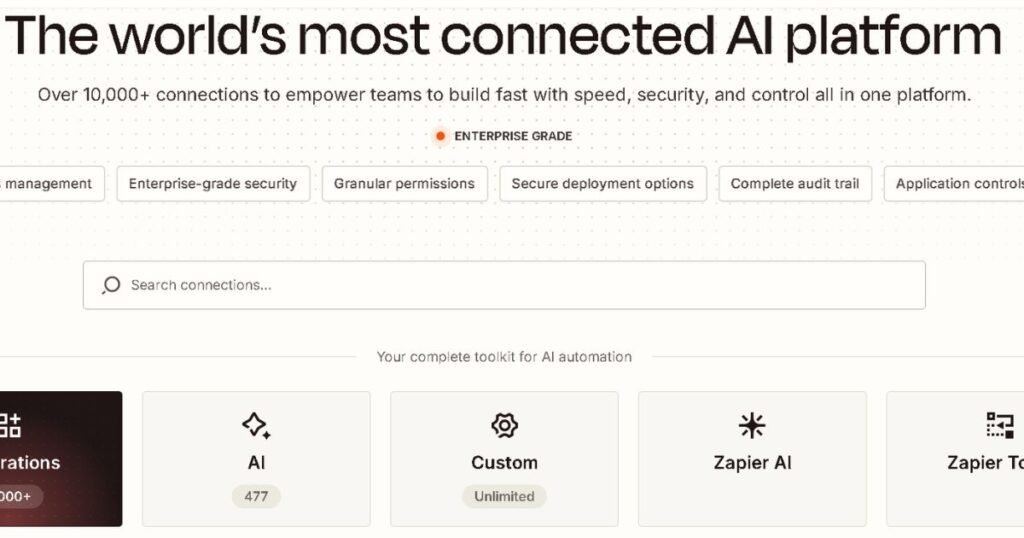
Content Automation Platforms — What They Actually Do
A content automation platform is a single dashboard that bundles content generation, SEO scoring, and publishing integrations into one tool. A content automation platform typically bundles multiple functions into one dashboard:
Bulk content generation from keyword lists or content calendars
- Built-in SEO scoring (readability, keyword density, structure checks)
- Direct publishing integrations (WordPress, Shopify, social platforms)
- Version control and approval workflows for team review
These platforms exist specifically to solve the pain point of in-house SEO managers who are tired of managing 10 different disconnected tools for research, writing, formatting, and publishing.
Automation Bots — The Behind-the-Scenes Workers
An automation bot (or bot automation system) is the smaller, task-specific engine that lives inside a bigger stack. Unlike a full platform, a bot usually does one job extremely well:
- A bot that pulls trending keywords daily and drops them into a content calendar
- A bot that reformats a blog post into 5 social captions automatically
- A bot that schedules and publishes content at optimal times across time zones
This modular approach is why so many lean agencies prefer bot automation over an expensive all-in-one platform — you only build (and pay for) the exact pieces you need.
Content Maker Software vs. Best AI Tools to Create Content
Content maker software and AI content tools differ mainly in scope — one focuses on fast, template-driven assets, the other on long-form drafting and research. There’s a subtle but important distinction between these two categories:
| Category | What It Is | Best For |
| Content maker software | Template-driven tools focused on fast asset generation (captions, graphics, short copy) | Solo creators, social-first brands |
| Best AI tools to create content | Broader AI systems capable of long-form drafting, research synthesis, and SEO structuring | Bloggers, agencies, SEO-focused teams |
Choosing between them comes down to one question: are you producing high-volume short content, or fewer high-value long-form assets? Most lean agencies eventually need both — a content maker software tool for daily social output, paired with a stronger AI writing tool for cornerstone blog content.
Pro Tip: Don’t chase the “one tool that does everything.” The most resilient stacks are modular — if one tool changes its pricing or shuts down a feature, you swap that single piece instead of rebuilding your entire pipeline.
Deep Dive — AI Blog Automation (WordPress Focus)
AI blog automation for WordPress is a pipeline that turns a keyword into a formatted, publish-ready draft using AI generation, SEO formatting, and the WordPress REST API — with a human review step before it goes live. This is the section niche bloggers and affiliate marketers have been waiting for. If you’re running multiple WordPress sites and manually writing every post, you already know the ceiling that creates — there are only so many hours in a day, and burnout is real.
AI blog automation WordPress setups solve this by building a repeatable pipeline: keyword in, formatted draft out, published automatically (or queued for a quick human review). No daily manual writing sessions required.
How the Pipeline Actually Works
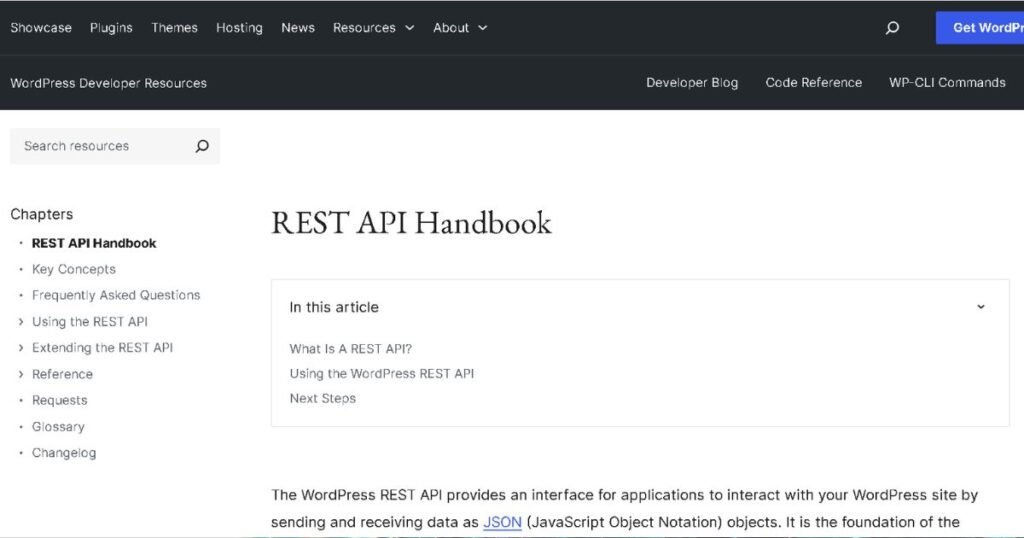
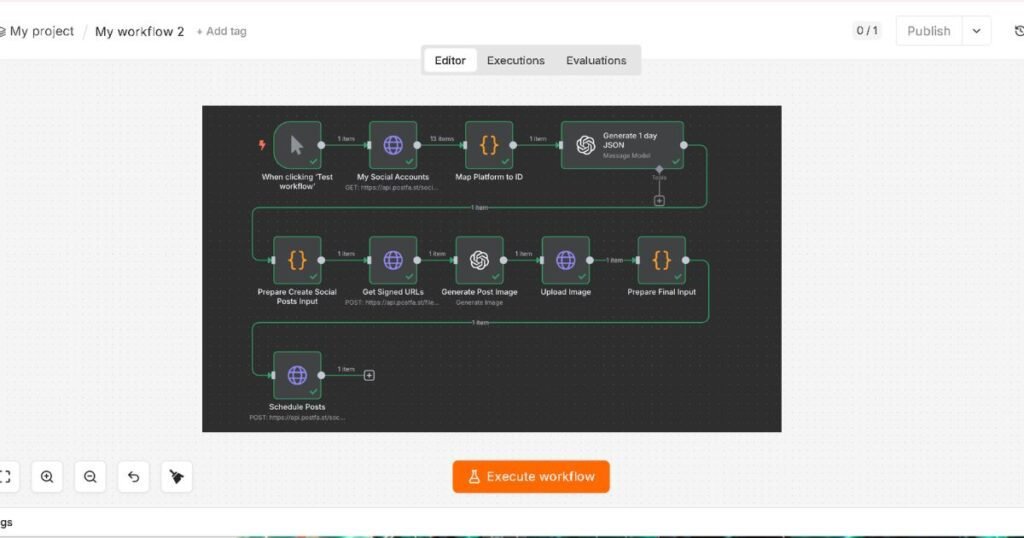
An AI blog automation pipeline works in five steps — keyword input, AI draft generation, SEO formatting, WordPress publishing, and human review. Here’s a simplified version of a real, working setup:
- Keyword/Topic Input — A spreadsheet, RSS feed, or trending-topic API feeds in article ideas.
- AI Draft Generation — An AI model generates a structured draft: intro, H2/H3 headings, body content, and a conclusion.
- Automated Structural & SEO Optimization — The content undergoes immediate refinement through strategic heading placement, bulleted lists, and internal linking structure, followed by a rigorous on-page SEO assessment.
- Secure Endpoint Publishing — Using the WordPress REST API (with proper authentication), the finished post is pushed directly into WordPress as a draft or scheduled post.
- Human Review Checkpoint — A quick editorial pass before it goes fully live — this is the non-negotiable step.
Quick Tidbit: The WordPress REST API is the backbone of almost every serious AI blog automation WordPress setup. It allows external tools (like n8n workflows) to securely create, edit, and publish posts without anyone logging into wp-admin manually.
Automatic Article Generation — What “Automatic” Really Means
Automatic article generation means a system produces a publish-ready draft from structured input like a keyword or outline, without a human typing it sentence-by-sentence. The term automatic article creation sounds like a magic button, but in practice it means something more specific: a system that takes structured input (a keyword, an outline, or a data feed) and produces a publish-ready draft without a human typing it sentence-by-sentence.
That said, “automatic” doesn’t mean “unsupervised forever.” The strongest setups still include:
- A secure API key/endpoint so only authorized workflows can publish
- A draft-first setting in WordPress (nothing publishes live without a checkpoint)
- A content calendar so the automation follows a strategy, not random topics

Auto Blogging AI vs. Autoblog AI — Is It Sustainable?
Autoblogging is sustainable only when AI drafts are paired with human review — fully unsupervised autoblogging tends to produce thin, repetitive content that struggles in search. Search interest in auto blogging AI and autoblog AI has grown fast, but there’s a real risk hiding underneath the hype: fully “set-and-forget” autoblogging — where zero human ever reviews the content — tends to produce thin, repetitive pages that struggle against Google’s quality systems over time.
The sustainable version looks different:
- AI generates 80-90% of the draft
- A human reviews for facts, tone, and internal linking
- Topics are chosen strategically, not randomly scraped
- Content is not published without any review layer at all
AI for Bulk Content Creation — Scaling Without Sacrificing Quality
AI for bulk content creation means batch-generating multiple article drafts from a keyword list while keeping formatting and quality consistent. For bloggers managing multiple sites, AI for bulk content creation is really about batch-processing topics efficiently:
- Generate 20-30 article drafts from a keyword list in one batch run
- Auto-apply consistent formatting (headings, meta descriptions, image alt text)
- Queue posts across a publishing calendar instead of dumping them all live at once
Pro Tip: Google doesn’t penalize automation itself — it penalizes low-value, unedited, mass-produced content. Space out your publishing calendar and keep that human review checkpoint, and bulk automation stays completely safe.
Content Operations & Workflow Optimization — Speeding Up Your Pipeline
Content operations refers to everything that happens after a draft exists — internal linking, formatting, scheduling, and keeping older posts updated as trends shift. Content creation represents merely the initial phase; the ultimate success depends on how effectively you position and promote it. The other half — the part most teams underestimate — is content operations: everything that happens after a draft exists. Internal linking, formatting consistency, scheduling, and keeping older content updated as trends shift.
This is where in-house SEO managers and content strategists usually feel the most pain. It’s not the writing that exhausts them — it’s the manual upkeep across dozens (or hundreds) of live pages.
Content Automation SEO — Making Sure Automation Doesn’t Skip SEO Basics
Content automation SEO (or SEO content automation) refers to layering SEO rules directly into the automation pipeline itself, instead of applying them manually after the fact. This typically includes:
- Auto-inserting internal links based on topic relevance
- Auto-generating meta titles and descriptions within character limits
- Auto-checking keyword placement in headings and first 100 words
- Auto-flagging thin content (below a set word count threshold) for review
Quick Tidbit: Pipelines that bake SEO checks directly into the automation step — rather than relying on a human to remember every rule — see far more consistent on-page SEO scores across large content libraries.
Media Workflow Automation — Beyond Just Text
Media workflow automation is the process of automatically resizing, tagging, and optimizing images and video assets so they don’t bottleneck an otherwise automated content pipeline. Media workflow automation extends the same logic to images, graphics, and video assets:
- Auto-resizing and compressing images for web performance
- Auto-generating alt text for accessibility and image SEO
- Auto-tagging and organizing media libraries so nothing gets lost across hundreds of posts
This matters more than it sounds — a beautifully automated article pipeline still fails on page speed and SEO if every featured image is a 4MB uncompressed file sitting untagged in the media library.
AI Solutions for Content Scheduling Automation
Content scheduling automation spaces out publish dates and syncs repurposed social content around a realistic calendar instead of publishing everything at once. Publishing everything the moment it’s drafted is a rookie mistake. AI solutions for content scheduling automation solve this by:
- Spacing out publish dates based on a realistic content calendar
- Auto-scheduling social repurposed content around the original post’s publish date
- Adjusting timing based on platform-specific optimal engagement windows
Pro Tip: A sudden spike of 50 new posts published in one day looks unnatural to search engines and readers alike. Scheduling automation isn’t just convenience — it’s a subtle trust signal for organic growth.
How Automation Tools Speed Up Content Updates
Automation tools speed up content updates by flagging outdated stats and dead links, then bulk-refreshing meta descriptions and CTAs across many posts at once. Old content doesn’t stay accurate forever — stats age, links break, and competitors publish better resources. This is exactly where manual teams fall behind, and exactly what how automation tools speed up content updates is really about:
- Automated crawlers flag outdated stats, dead links, or thin sections
- Bulk-update templates refresh dozens of posts’ meta descriptions or CTAs at once
- Version-controlled edits let teams roll back changes if an update underperforms
Quick Tidbit: Refreshing and republishing outdated content is consistently one of the highest-ROI SEO activities — and it’s exactly the kind of repetitive task automation handles best, freeing strategists to focus on bigger-picture planning.
Content Automation — Pros & Cons Breakdown
Content automation offers major time and consistency gains, but carries real risks — including robotic tone, trend blindness, and Google’s Helpful Content Update filters if left unedited. No tool or strategy is perfect, and pretending automation has zero downsides would be dishonest — and bad SEO advice. Here’s the honest, no-fluff breakdown, laid out for quick scanning (and built to boost dwell time for readers comparing their options).
| Pros | Cons |
| Massive administrative and formatting time saved weekly | High risk of robotic tone and generic copy without a personal touch |
| One master idea can be instantly repurposed for 5+ platforms | “Set-and-forget” setups fail quickly when search intent trends change |
| Consistency increases drastically, feeding organic algorithms | Heavy reliance on programmatic generation can trigger Google HCU filters if unedited |
Breaking Down the Pros
- Time savings compound fast. What used to take a full day of formatting, scheduling, and cross-posting now takes minutes once a pipeline is built.
- One idea, many platforms. A single blog post can automatically become a Twitter thread, three Instagram captions, and a newsletter blurb — without rewriting from scratch each time.
- Consistency signals reliability. Search engines and audiences both respond well to steady, predictable publishing — something manual teams often struggle to maintain long-term.
Breaking Down the Cons
- Robotic tone risk. Unedited AI output tends to sound generic — readers (and Google) can often tell when there’s no human fingerprint on the content.
- Trend blindness. Automation that runs on rigid templates can miss sudden shifts in what people are actually searching for, publishing content that’s technically live but strategically outdated.
- HCU (Helpful Content Update) risk. Google’s quality systems are specifically designed to catch mass-produced, unedited, low-value content. Automation without a human review layer is the single most common way sites get caught in this filter.
Pro Tip: Every con in this table has the same fix: keep a human checkpoint in the loop. Automation should remove grunt work, not remove judgment. Teams that follow this one rule rarely run into the downsides listed above.
4.Workflow Automation & Operations
FAQs
Q1: What is automated content creation?
Automated content creation is the use of AI tools and software to generate, format, and publish content with minimal manual effort. It handles repetitive tasks like drafting and scheduling, while humans focus on editing and strategy.
Q2: What is the 80/20 rule for automation?
It means automating roughly 80% of repetitive tasks — drafting, formatting, scheduling — using AI. The remaining 20% stays human: tone mapping, fact-checking, and final editorial judgment before publishing.
Q3: Is it legal to use AI to create content?
Yes, using AI for content creation is legal, provided the output isn’t directly copied from copyrighted databases. Adding original research, edits, and compliance checks keeps it safe and plagiarism-free.
Q4: What are the 5 C’s of content creation?
The 5 C’s are Context, Curation, Creation, Correction, and Circulation — covering everything from understanding audience intent to publishing and distributing the final piece.
Ready to Take Action? Try Our Free Tools
Now that you understand how automated content creation works — from AI drafting to WordPress publishing pipelines — it’s time to put these insights into practice. The free tools below can help you build, optimize, and scale your own content automation workflow without needing a developer or a big budget.
1. Find the Right AI Tool
Not sure which AI solution fits your needs? Simply describe your goal, and our AI-powered recommendation tool will identify the most suitable option for your specific task in just a few seconds. It’s completely free and requires no sign-up.
2. Analyze Your AI Search Visibility
Want to know how AI search platforms may present your brand? Use our AI Overview Preview tool to see how your content could appear in Google’s AI-generated summaries. This gives you a clear starting point before investing in advanced GEO solutions.
3. Estimate Your AI Software Budget
Planning your AI toolkit doesn’t have to be complicated. Our AI Tool Stack Calculator estimates the tools and budget your team may need based on your business size, goals, and workflow—delivering a personalized recommendation in just a few minutes.
4. Estimate Your Content Automation ROI
Not sure if automation is worth the investment? Our AI Content ROI & Automation Cost Calculator shows you exactly how much time and money you could save by switching from manual content creation to an automated pipeline — based on your team size and publishing volume.
5.Workflow Automation & Operations
Best Free PDF Invoice Data Extractor Tool Online: Say goodbye to manual data entry! Upload your PDF invoices and extract all crucial data into clean formats within seconds.

I’m Umair Ahmad, founder of ToolsRevis. I personally test every AI tool we cover — signing up, running real workflows, checking pricing tiers, and comparing outputs — before writing a single word. My goal: cut through AI marketing hype with honest, hands-on verdicts.
Let’s achieve more together!